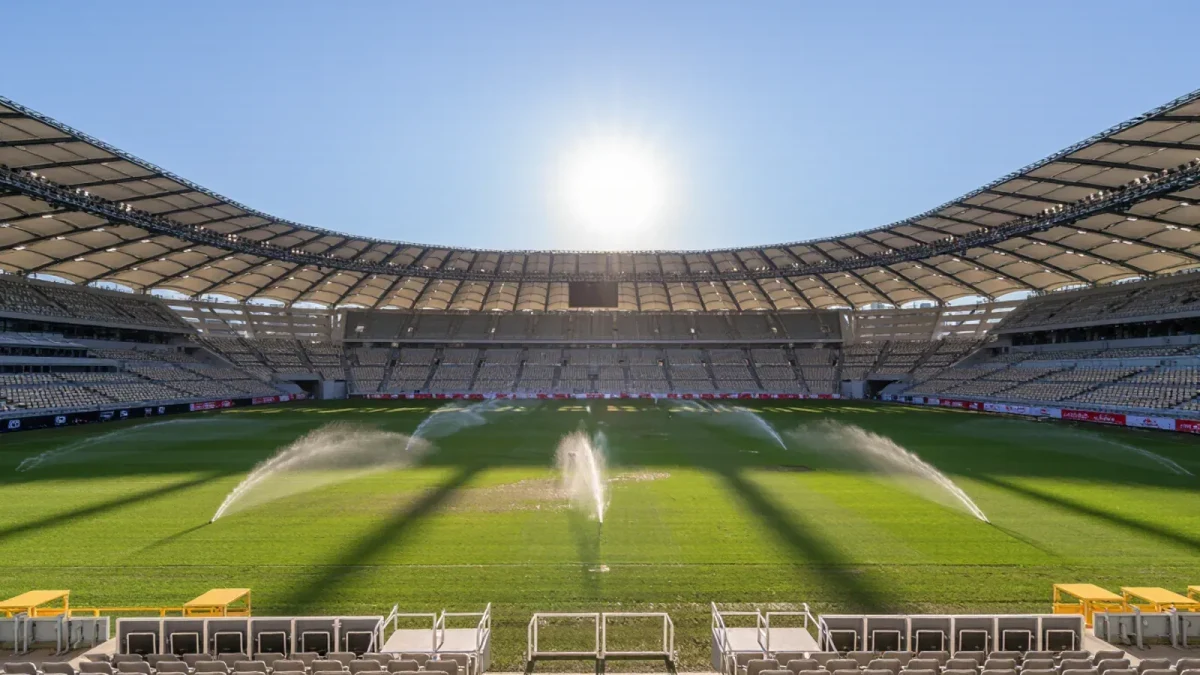
Ten days into the 2026 World Cup, which opened on 11 June 2026 across the United States, Mexico and Canada, heat has moved from a research warning to a visible part of the tournament. Per FIFA, which announced the policy in December 2025, every match includes three-minute hydration breaks midway through each half — the first time breaks apply to all 104 games regardless of weather. Pre-tournament analyses had flagged exactly this risk: a 2025 peer-reviewed study by Mullan and colleagues assessed all 16 venues and found afternoon kickoffs carried the greatest extreme-heat exposure.
24 News Click publishes information, not medical advice. Heat illness is a medical emergency category; questions about individual heat or hydration plans belong with qualified clinicians.
What did the analyses predict?
Per Climate Central's pre-tournament venue analysis, Monterrey's group-stage matches carried a greater-than-50 percent likelihood of conditions in the performance-impairing heat range, and analyses by weather trackers — including The Athletic's heat monitor published 10 June 2026 — ranked hot-weather venues such as Dallas and Monterrey among the most concerning. Per a Reuters Graphics explainer, FIFA's international guidance links cooling breaks to a wet-bulb globe temperature threshold of 32°C, with postponement considered in extreme conditions; the 2026 blanket-break policy goes further than that threshold system.
Related stories: World Cup 2026 heat: how hydration works · Heat, sweat and hydration in football.
What does the science say the breaks change?
The soccer thermoregulation literature documents match body-mass losses of roughly 1 to 3 kilograms in warm conditions and measurable performance degradation around 2 percent body-mass loss. Scheduled breaks give players drinking windows beyond natural stoppages and brief cooling relief; the research frames such drinking as limiting, not eliminating, the fluid deficit, because the gut absorbs fluid at a finite rate. Some coverage has questioned applying breaks in air-conditioned and cooler venues — a fair criticism that cuts to the policy's one-size-fits-all design, per ESPN's reporting on the debate.
What has the first week and a half meant in practice?
The group stage, which runs to 27 June 2026 before knockouts begin on 28 June, has seen midday and early-afternoon kickoffs at hot-weather venues played under the new break schedule, per the published FIFA fixture list. For players, the documented stakes are the ones this publication has covered all cycle: cumulative dehydration across a condensed tournament, and heat's known drag on sprint repeatability and decision-making late in matches. For viewers, the breaks are now simply part of the rhythm of the tournament — three minutes, twice a match, every match.